

A Comparative Study of Hierarchical Approaches in Engineering Modelling
In the realm of engineering design and 3D modelling, SolidWorks stands out as a versatile tool, offering multiple approaches to creating detailed models and assemblies. Two primary methodologies, top-down and bottom-up modelling, are widely adopted by professionals to conceptualise and realise complex designs. Each approach possesses unique advantages and challenges that influence the efficiency, cost, and overall outcome of a project. This article delves into the nuances of both methods, providing insight into their implications on design costs.
Top-Down Modelling: An Overview
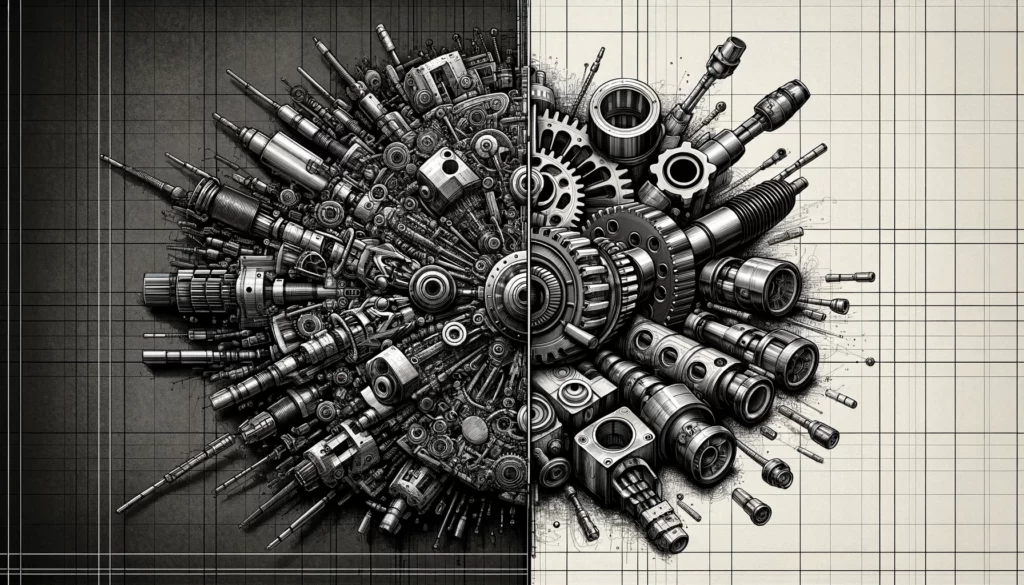
Top-down modelling is a strategy where the design begins with a broad overview, establishing the main assembly or system first, before detailing individual components. This method is particularly beneficial for projects requiring a strong interdependency between components, ensuring cohesive functionality and fit.
Pros:
- Cohesive Design Integration: Top-down allows for a holistic view of the assembly, ensuring all parts fit together seamlessly within the overall system. This integrated approach is crucial for complex assemblies where inter-part relationships are key.
- Parametric Associations: It enables the creation of parametric relationships between parts, allowing changes in the master model to propagate automatically to individual components, thus ensuring consistency across the design.
- Enhanced Collaboration: This method facilitates collaboration among team members, as the overall design intent and constraints are established early in the design process.
Cons:
- Initial Complexity: The approach can be overwhelming initially, as it requires a comprehensive understanding of the final assembly from the outset, potentially leading to a steeper learning curve.
- Performance Issues: Large assemblies can strain system resources, especially when multiple parts are being worked on simultaneously, leading to slower performance.
- Risk of Over-Constraining: There’s a tendency to over-constrain designs, making it challenging to accommodate changes or iterations later in the development process.
Bottom-Up Modelling: An Overview
Conversely, bottom-up modelling starts with the creation of individual parts, which are later assembled to form the final product. This method is ideal for projects where individual components are the focus, and their assembly is straightforward or secondary.
Pros:
- Simplicity and Flexibility: Starting with simpler parts makes the design process more manageable and allows for greater flexibility in modifying individual components without affecting the entire assembly.
- Improved Performance: Working on individual parts is less demanding on system resources, making this approach more suitable for systems with limited computational power.
- Incremental Testing: Components can be designed and tested independently, ensuring functionality before integration into the larger assembly.
Cons:
- Integration Challenges: Ensuring that all components fit together perfectly in the final assembly can be more challenging, as the design evolves without a predefined overarching structure.
- Reduced Visibility of the Final Product: Without a clear initial vision of the final assembly, there might be a lack of direction, potentially leading to design inefficiencies.
- Potential for Redundancies: There’s a risk of creating redundant or incompatible parts without a unifying design strategy from the outset.
Cost Implications
The choice between top-down and bottom-up modelling has significant cost implications at various stages of the design process:
- Design Phase: Top-down modelling might require more upfront investment in terms of time and resources to establish the overall design framework. However, this can lead to savings in the later stages by reducing the need for significant redesigns. Bottom-up modelling might seem cost-effective initially due to its incremental nature, but potential integration issues can escalate costs down the line.
- Prototype and Testing: The integrated approach of top-down modelling can streamline the prototyping phase, as the design’s cohesive nature likely requires fewer iterations. In contrast, bottom-up may incur additional costs due to the need for multiple prototypes to ensure component compatibility.
- Manufacturing: Top-down modelling can potentially reduce manufacturing costs by ensuring all components are designed with the final assembly in mind, minimising the risk of costly manufacturing errors. Bottom-up, while offering flexibility in component design, might lead to increased manufacturing costs if component revisions are required for assembly integration.
Conclusion
Both top-down and bottom-up modelling in SolidWorks offer distinct advantages and challenges, with significant implications for design costs. The choice between these methodologies depends on the specific requirements of the project, including complexity, interdependencies, and resource availability. A nuanced understanding of each approach’s strengths and limitations is essential for making informed decisions that optimise efficiency, reduce costs, and ensure the successful completion of engineering projects.