

The Fusion of Fluid Dynamics and Material Science in Mixer Design
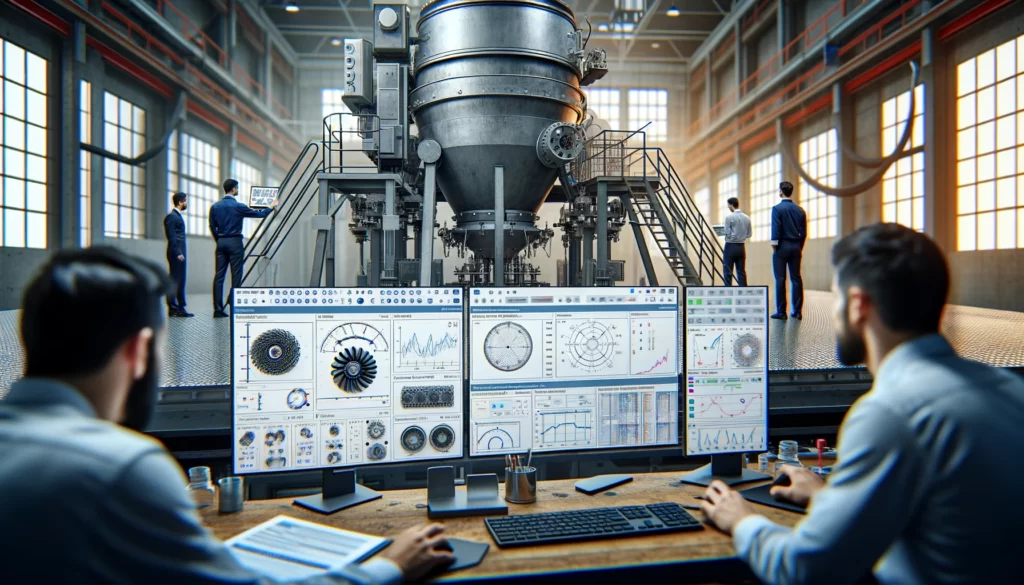
The design and manufacturing of industrial mixing machines is an intricate process that combines the principles of engineering, materials science, and process control to produce devices capable of blending a variety of substances to precise specifications. This article delves into the key considerations and methodologies involved in these processes, aiming to shed light on how these complex machines are designed and manufactured.
Design Considerations
The initial phase in the creation of an industrial mixer is the design process, which is driven by the specific needs of the application it’s intended for. Factors such as the type of materials to be mixed, their physical properties (e.g., viscosity, density), the mixing environment (temperature, pressure), and the desired outcome (homogeneity, particle size) are pivotal. Customisation plays a significant role here, as every mixing process can have unique requirements. Engineers work closely with clients to ensure all specifications and process conditions are accurately captured. This collaboration is crucial to tailor the mixer to the precise needs of the application, ensuring efficiency and effectiveness.
Engineering Principles
The engineering of mixing machines involves a detailed understanding of fluid dynamics, material properties, and mixing technologies. The choice of mixing mechanism (e.g., paddle, ribbon, impeller) is dictated by the nature of the materials and the required mixing action. For instance, high-viscosity mixtures might require strong shear forces, which in turn influence the design of the mixer’s blades or impellers. Advanced computer simulations, such as Computational Fluid Dynamics (CFD), are often employed to model and predict the mixer’s performance, allowing for fine-tuning of the design before any physical manufacturing begins.
Manufacturing Processes
Once the design has been finalised and validated, the manufacturing stage commences. This involves the selection of suitable materials and components, fabrication techniques, and assembly processes. The construction materials must be chosen with care to withstand the specific conditions of the mixing process, such as corrosive chemicals or high temperatures. Stainless steel, for example, is a common choice for its durability and resistance to corrosion.
Fabrication techniques can vary widely, from welding and machining to more sophisticated methods like laser cutting or 3D printing or stronger additive processes for complex parts. The assembly process must ensure that all components fit together perfectly to maintain the integrity of the mixer and prevent any leaks or failures during operation.
Quality Assurance and Testing
Quality control is an integral part of the manufacturing process. Rigorous testing is conducted to ensure that each mixer meets the specified standards and operates as intended. This might include stress testing components, verifying material compatibility, and conducting performance trials with actual or simulated product materials. Only after passing these stringent tests can the mixer be deemed ready for deployment in its industrial setting.
The design and manufacturing of industrial mixing machines are comprehensive processes that require a deep understanding of the application, meticulous engineering, and precise fabrication. The goal is to produce a machine that not only meets the client’s needs but also operates efficiently and reliably in diverse industrial environments. The collaborative approach between engineers and clients, combined with advanced simulation and testing, ensures that each mixer is a bespoke solution tailored to the specific demands of its application.
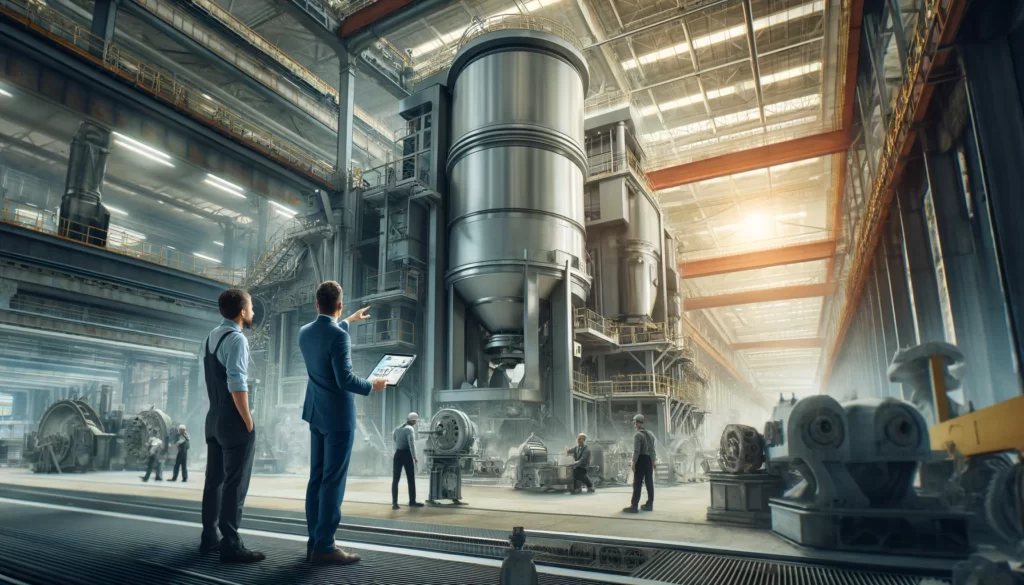
The engineering principles and theories that underpin the design and manufacture of industrial mixing machines form a cornerstone in the creation of these essential industrial tools. This intricate field of engineering incorporates elements from fluid dynamics, material science, mechanical engineering, and thermodynamics, among others. The following sections delve into the core principles and theories that guide the engineering of industrial mixers.
Fluid Dynamics and Rheology
Fluid dynamics plays a pivotal role in mixer design, particularly through the study of how liquids and gases move. This is crucial for understanding the flow patterns that develop within a mixer and how these patterns influence the mixing process. Rheology, the study of flow and deformation of matter, is also critical, especially when dealing with non-Newtonian fluids whose viscosity changes under stress. Engineers must understand these principles to design blades and impellers that produce the desired flow patterns and mixing actions for a range of materials.
Mechanical Engineering Principles
Mechanical engineering fundamentals are applied in the design of the mixer’s moving parts, such as impellers, agitators, and motors. The strength of materials and dynamics are crucial areas of focus. Engineers must ensure that the components can withstand the mechanical stresses involved in mixing, including torque and shear forces, without failure. This involves calculating load capacities, fatigue life, and wear resistance of materials and components.
Thermodynamics and Heat Transfer
In processes where temperature control is critical, principles of thermodynamics and heat transfer are essential. This is especially true for mixers involved in chemical reactions, where exothermic or endothermic reactions can significantly affect the mixture’s temperature. Engineers design cooling or heating jackets and consider the thermal conductivity of materials to manage the temperature within the mixer, ensuring the process stays within the optimal range for the desired chemical reactions or physical changes.
Material Science
The selection of appropriate materials for the construction of mixing machines is governed by material science principles. The materials must not only be strong enough to handle the mechanical loads but also be compatible with the substances being mixed. This is particularly important in industries like pharmaceuticals and food processing, where contamination must be avoided. Engineers select materials that are resistant to corrosion, wear, and chemical attack, ensuring longevity and reliability.
Process Control and Automation
Modern industrial mixers often incorporate sophisticated process control and automation systems. These systems rely on principles of control engineering to monitor and adjust the mixing process in real-time, ensuring consistency and quality. Sensors and control algorithms are used to maintain the correct speed, power, and temperature, adapting to changes in the mixture’s properties or the external environment.
Computational Modelling and Simulation
Advancements in computational power have enabled the extensive use of modelling and simulation in mixer design. Computational Fluid Dynamics (CFD) and Finite Element Analysis (FEA) are commonly used to predict the performance of a mixer before it is built. These simulations allow engineers to optimise the design for efficiency, effectiveness, and safety, reducing the need for physical prototypes and trial-and-error testing.
The engineering of industrial mixing machines is a multidisciplinary endeavour that draws on a wide range of scientific principles and theories. From the fluid dynamics governing the movement of mixtures to the mechanical principles ensuring the durability of components, and from the material science dictating compatibility and longevity to the process control systems ensuring operational precision, each aspect plays a vital role in the creation of efficient, reliable, and effective mixing solutions.
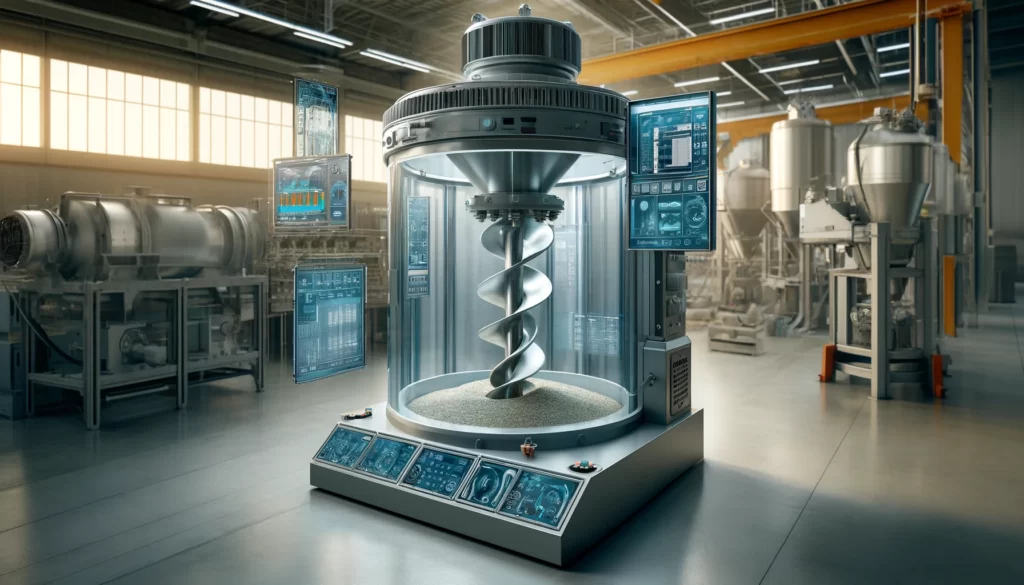
Warburtons Bakery, as a leading bakery brand, offers a compelling real-world example of how industrial mixing machines are crucial in large-scale food production. The bakery’s commitment to quality and efficiency is supported by the sophisticated use of these mixers, which are integral to the consistency and texture of their wide range of baked goods.
Application of Industrial Mixers at Warburtons:
- Dough Mixing: The primary use of industrial mixers in a bakery like Warburtons is in the preparation of dough. The mixers must handle various types of dough with different hydration levels, from stiff dough for bread and rolls to more liquid batters for cakes and pastries. The mixers need to incorporate ingredients uniformly, ensuring that yeast, water, flour, and other additives are thoroughly blended to achieve the desired dough consistency.
- Scalability: Warburtons operates on a scale that requires mixers capable of processing large batches of dough efficiently. Industrial mixers used in such settings are designed for high capacity, capable of mixing several hundred kilograms of dough per batch. This scalability is crucial for meeting the bakery’s high production demands.
- Customisation for Different Products: Warburtons’ diverse product range requires mixers that can be adapted to different recipes and mixing techniques. For example, the production of whole grain bread might require a different mixing action compared to white bread or crumpets, to properly develop the dough’s gluten structure without overworking it.
- Automation and Control Systems: Advanced automation systems are employed to ensure consistency and quality in every batch. These systems control mixing times, speeds, and sequences, allowing Warburtons to replicate the same high-quality dough batch after batch, crucial for brand consistency.
- Hygiene and Safety: In the food industry, hygiene is paramount. Mixers used by Warburtons are likely designed for easy cleaning and sanitisation, with materials that meet food safety standards. The mixers’ design minimises areas where dough can collect and harden, ensuring thorough cleaning can be achieved efficiently.
- Energy Efficiency: Large-scale operations like Warburtons’ are conscious of energy consumption. Modern industrial mixers are designed to be energy-efficient, reducing the bakery’s operational costs and environmental impact.
Example Scenario:
Consider the production of Warburtons’ famous wholemeal bread. The process begins with the careful selection of whole grains, which are then ground into flour. This flour is transported to industrial mixers, where it is combined with water, yeast, salt, and any other necessary ingredients. The mixers must work the dough enough to develop the gluten structure, which gives the bread its texture and allows it to rise properly. However, overmixing must be avoided to prevent the dough from becoming too tough. Once mixed, the dough undergoes proofing, shaping, and baking processes to become the final product that reaches consumers.
Warburtons Bakery exemplifies the critical role of industrial mixing machines in the food production industry. The efficiency, customisability, and consistency provided by these mixers are essential for maintaining the high standards of quality and taste that Warburtons is known for.